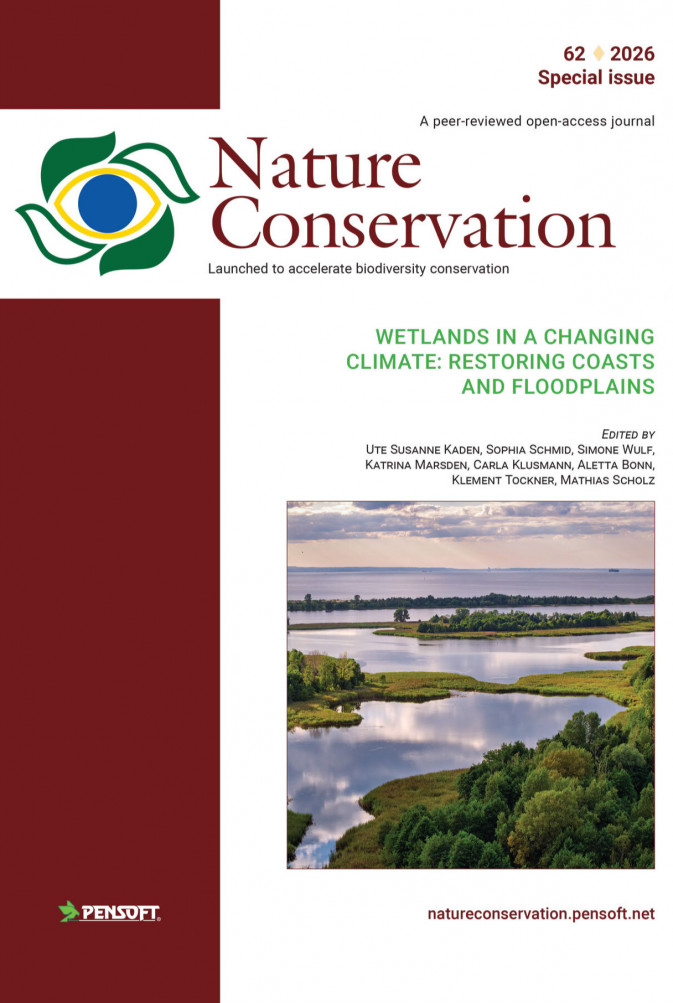
A new REST-COAST research is featured in the ‘Wetlands and Climate Change’ Special Issue
The open-access journal Nature Conservation now hosts a new Special Issue titled “Wetlands in a Changing Climate.” The collection brings together scientific research and collaborative work from several European initiatives, including the REST-COAST, SpongeBoost, BioAgora and RESPIN projects.
The Special Issue gathers 17 research papers that explore how wetlands respond to climate change and how restoration and policy action can support their protection. The collection represents a broad international collaboration involving more than 100 researchers from 16 countries, highlighting the urgent need for interdisciplinary approaches to restore and safeguard coastal and floodplain ecosystems.
Among the contributions is a study developed by Carles Ibáñez and Nuno Caiola of Eurecat, within the context of REST-COAST.
The article titled “To what extent is coastal wetland biodiversity endangered by climate change? How can we boost the resilience of coastal ecosystems?” looks into the extent to which coastal wetland biodiversity is endangered by climate change.
Global projections show that coastal wetlands are increasingly threatened by sea-level rise, warming, acidification and other environmental pressures. Coastal wetland biodiversity has already declined significantly, with salt marshes among the most endangered habitats in Europe.
The study highlights that strengthening resilience requires scaling up wetland restoration, improving hydrological connectivity and increasing sediment supply, supported by effective management and policy.
Read the publication here and explore the full Special Issue to find out how we can boost the resilience of the coastal ecosystem.